Unlock Your Behavioral Style
Test Yourself
Online DISC Assessment: Personality Test for Your Profile
 The Ultimate Guide to Free DISC Personality Insights
New Updates

Understanding DISC Profile: A Practical Guide to Behavior and Communication
What This Behavioral Model Is and Why It Matters
The modern workplace runs on collaboration, clarity, and trust, yet teams often stumble when people...

The Ultimate Guide to the DISC Test: Benefits, Uses, and Insights
What Is DISC and Why Do People Use It
Organizations of every size rely on DISC to illuminate how people prefer to communicate, make decisions, and co...

Deep Guide to DISC Personality Test: Styles, Insights, and Real-World Value
What the DISC Framework Is and Why It Still Matters
DISC offers a clear, behaviorally focused lens that describes how people tend to approach problem...
DISC Personality Assessment Test
Get StartedImprove Communication & Teamwork With a DISC Profile Assessment
Organizations crave a common language for behavior, and few models translate interpersonal dynamics into everyday action as clearly as this one. Rooted in observable patterns rather than clinical diagnosis, it helps people interpret how they and others approach pace, priority, and problem-solving. The approach shines because it is practical, repeatable, and adaptable across cultures and industries. When teams adopt this shared vocabulary, friction turns into forward motion and collaboration begins to scale.
Clarity arrives when you connect tendencies to context, because behavior is always interacting with the environment. Within that conversation, the DISC assessment meaning becomes concrete as people map tendencies to real conversations, feedback moments, and decisions on the fly. Instead of stereotyping, the framework encourages situational flexibility and mindful communication. Many practitioners emphasize observation over assumption so that data and dialogue reinforce each other.
The conceptual roots stretch back to research on emotions and behavior, yet modern practice focuses on ethics, transparency, and practical utility. In contemporary usage, the DISC model serves as a compass that points to preferred modes of action rather than fixed identity labels. A well-run debrief emphasizes nuance because individuals flex across styles depending on stakes, stress, and setting.
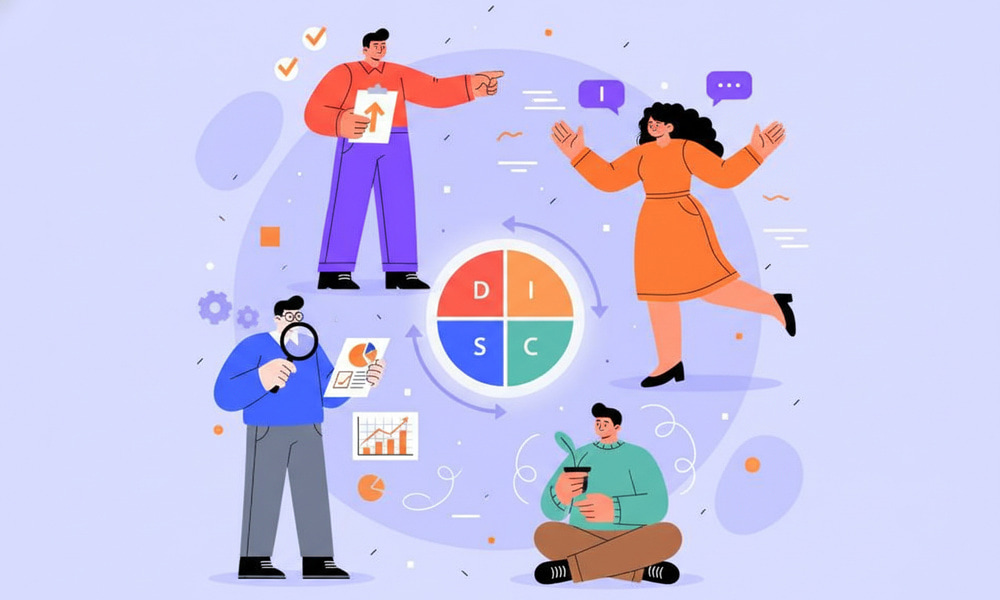
Core Styles and How They Show Up in Real Life
Most newcomers recognize the four-style map quickly, yet the richness emerges in the gradients, blends, and context cues. Directness versus deliberation, fast pace versus measured pace, and people focus versus task focus create an elegant grid. That structure illuminates natural strengths while also exposing blind spots that can be bridged with small behavioral tweaks. In everyday conversations, understanding DISC personality helps colleagues predict reactions without falling into rigid boxes or assumptions.
- Dominance: swift decisions, bold goals, comfort with conflict, preference for efficiency and autonomy.
- Influence: social energy, optimism, storytelling, enthusiasm for brainstorming, and cross-functional connection.
- Steadiness: calm presence, reliable support, patience, commitment to harmony, and steady progress.
- Conscientiousness: precision, inquiry, standards, preference for accuracy, and structured problem solving.
Style blends matter because few people live at one extreme all the time, and pressure can amplify behaviors that aren’t always visible. Teams benefit when each member builds a personal narrative that aligns their superpowers to shared outcomes. In many implementations, a well-constructed DISC profile becomes the starting point for personal reflection and team coaching. Facilitators often pair narrative coaching with data so that the portrait becomes actionable, which is the essence of thoughtful DISC personality profiling.
Business Benefits and Leadership Applications
From onboarding to succession planning, the framework translates into measurable gains when embedded in key workflows. Sales organizations deploy it to tailor DISCovery and negotiate with empathy, while support teams use it to de-escalate tense moments. In leadership pipelines, a careful DISC leadership assessment highlights how an individual leads under calm conditions versus crunch time. Managers then craft development plans that match observed behavior to situational demands.
| Use Case | Primary Goal | Practical Outcome |
|---|---|---|
| Team Kickoff | Build shared vocabulary | Faster trust and clearer norms |
| Sales Enablement | Tune messaging to buyer styles | Higher conversion and fewer stalls |
| Conflict Mediation | De-escalate and align interests | Quicker resolution with less residue |
| Project Handoffs | Reduce ambiguity in transitions | Smoother execution and fewer reworks |
Operationally, teams see fewer misfires when workflows reflect style preferences around pace, detail, and autonomy. In collaborative environments, a robust DISC workplace profile shortens the learning curve for new partnerships and cross-functional squads. Data becomes durable when leaders revisit insights during retros, one-on-ones, and planning cycles. That rhythm keeps observations fresh and fuels continuous DISC analysis that informs process improvements.
Taking, Interpreting, and Validating Results
Quality starts with a sound instrument, clear instructions, and a psychologically safe setting. Most programs start with a DISC assessment to establish a baseline for later coaching. Many practitioners recommend a quiet environment and a specific time window so the DISC test reflects typical behavior rather than a rushed mood. After completion, participants should review results privately and then discuss highlights with a trained facilitator. Reflection questions help distinguish stable tendencies from situational habits shaped by role or recent stressors.
Interpretation is most useful when it moves beyond labels into practical micro-behaviors that can be tried immediately. A credible DISC personality assessment offers language for how someone responds to priorities, and then suggests adaptive strategies for different audiences. For example, a fast-paced teammate can slow their cadence when presenting to a detail-oriented stakeholder. Likewise, a steady collaborator can practice direct requests when deadlines tighten and ambiguity rises.
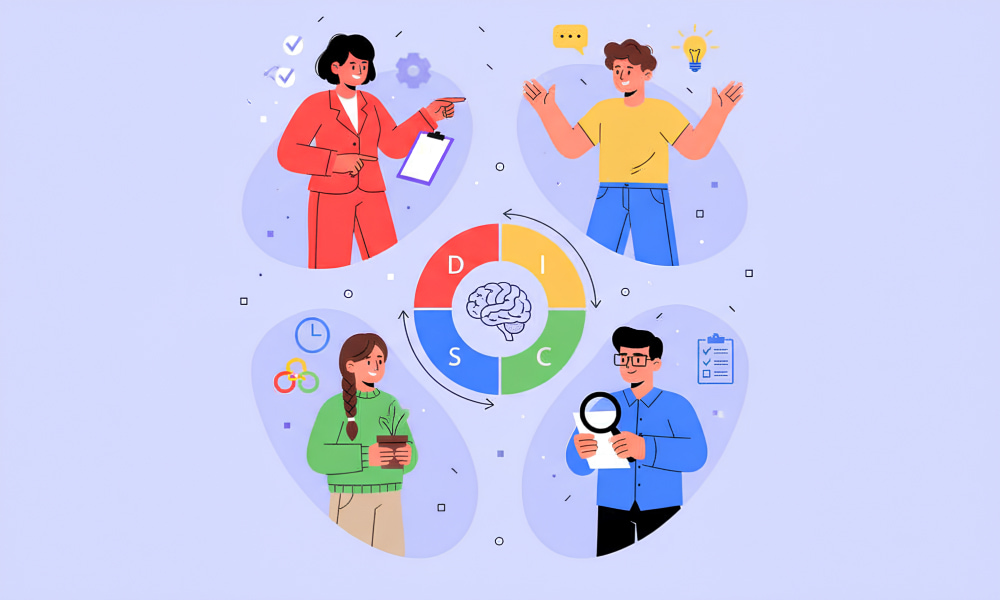
Access matters, yet so does quality and guidance when people first encounter the framework. Some providers offer a limited DISC assessment free option that introduces concepts before a fuller debrief is considered. Organizations often combine initial exposure with coaching circles so insights become habits rather than fleeting curiosities. Over time, that support converts awareness into predictable shifts in communication and execution.
Implementation, Coaching, and Ethical Use
Sustainable adoption blends assessment, conversation, and everyday practice inside real work. Leaders anchor the language in rituals such as kickoff agendas, project charters, and feedback sessions so it never feels like a one-off workshop. Coaching plans become more concrete when they include role-play, shadowing, and targeted DISC training that translates concepts into muscle memory. Metrics then track improvements in cycle time, meeting efficiency, and stakeholder satisfaction to validate impact.
- Start with clear intent and guardrails to prevent misuse or stereotyping across teams.
- Map style insights to real deliverables, not just abstract traits or posters on a wall.
- Pair peers with complementary strengths to accelerate execution and knowledge transfer.
- Revisit norms quarterly so agreements evolve with scope, stakeholders, and markets.
- Protect privacy, DISClose methods, and emphasize choice in sharing personal insights.
DISC Personality Assessment Test
Get StartedFAQ: Clear Answers to Common Questions
-
What is DISC and why does it matter for modern teams?
At its core, the framework offers a practical vocabulary for observable behavior so people can collaborate with less friction. In plain language, the phrase what does DISC stand for anchors the conversation before teams connect the ideas to meetings, feedback, and decision rituals. The value shows up in faster alignment, better conflict navigation, and cleaner handoffs when the stakes are high.
-
How can I get started if my budget is limited?
Plenty of teams begin with primers, worksheets, and pilot conversations before investing in full programs. When accessibility is essential, some groups explore a reputable DISC assessment online free option and then add coaching to deepen understanding. The best results come from pairing any instrument with practice, reflection, and transparent norms about how insights will be used.
-
Are results permanent or do they change over time?
Behavioral preferences are relatively stable, but situational factors, role shifts, and stress can nudge expressions of style. People often flex when stakes rise, or audiences change, so revisiting insights during retros keeps the language relevant. That cadence helps separate enduring tendencies from temporary adaptations.
-
Should DISC be used in hiring decisions?
Ethical guidance recommends using behavioral insights for development and communication, not as a filter for candidate selection. Role fit, capability, and values alignment deserve primary weight when choosing teammates. If used at all in talent processes, the model should inform onboarding and collaboration, not gatekeeping.
-
What makes a debrief or workshop truly effective?
Great sessions are psychologically safe, focused on real work, and designed with experiential activities that connect insights to action. Facilitators translate data into micro-behaviors participants can try immediately in meetings and projects. Follow-through with coaching and feedback loops turns a single event into durable performance gains.