
The Ultimate Guide to Free DISC Personality Insights
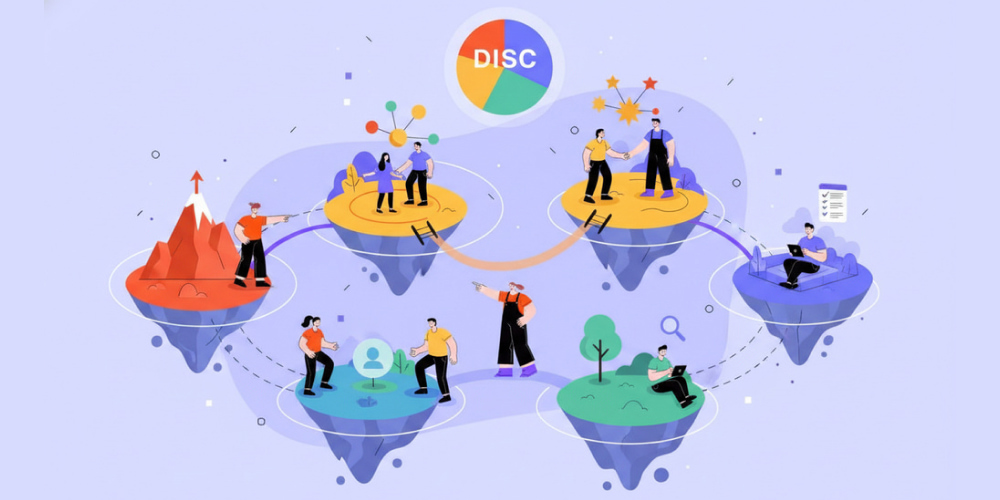
DISC Personality Assessment Test
Get StartedWhat the DISC Model Measures and Why Cost Shouldn’t Block You
People use the DISC framework to decode behavioral tendencies, sharpen communication, and reduce friction across daily collaborations. The model distills patterns into four observable styles, Dominance, Influence, Steadiness, and Conscientiousness, allowing you to interpret how someone approaches problems, pace, people, and procedures. Whether you lead a large team or simply want to understand your own preferences, the language of DISC offers a practical compass for self-awareness and for navigating the style differences of colleagues, clients, and stakeholders.
Modern digital platforms have removed many barriers, particularly the price barrier, so curiosity no longer collides with a paywall. You can establish a reliable baseline by choosing a DISC assessment free option that still follows the classic four-factor framework.
Reliable tools translate behavioral patterns into everyday applications such as meeting dynamics, sales DISCovery, and feedback delivery. Many learners begin with a DISC personality test free experience to validate interest before investing in deeper coursework.
Onboarding a team to shared terminology often starts with accessible questionnaires that take less than ten minutes to complete. If you’re comparing providers, consider sampling a DISC test for free to gauge the clarity of feedback and the granularity of style insights.
- Decode how you respond under pressure versus routine conditions.
- Spot blind spots that show up in handoffs, deadlines, or negotiations.
- Adopt simple scripts to flex your style without losing authenticity.
How No-cost DISC Tools Work, Plus What to Expect
Most instruments present short statements and ask you to choose descriptors that sound most and least like you. Behind the scenes, an algorithm scores selections along the four continua and then compiles an easy-to-read narrative. The best experiences translate those scores into practical strategies, such as how to open conversations, structure agendas, or prioritize tasks in mixed-style settings.
Look for transparency about methodology, sample size used for norming, and any limitations stated by the publisher. When a platform offers a free DISC personality test, look for item balance across Dominance, Influence, Steadiness, and Conscientiousness to avoid skewed scores.
| Checklist Item | What to Verify | Why It Matters |
|---|---|---|
| Question Balance | Even spread across all four DISC dimensions | Prevents over-weighted results that distort style |
| Report Clarity | Plain-language tips, examples, and do/don’t lists | Speeds up adoption and daily application |
| Data Practices | Clear privacy policy and data retention details | Protects respondent information and trust |
| Action Steps | Concrete recommendations for meetings and projects | Turns theory into visible behavior change |
Good design also includes context sections that explain what scores do not mean, so users avoid stereotyping or overgeneralizing. If you are just exploring, it makes sense to begin with a free DISC test while paying attention to how results translate into behavior you can observe at work.
As you evaluate options, prioritize instruments that include scenario-based advice and examples for cross-style collaboration. You’ll gain more momentum when the report offers role-specific guidance, and that’s still possible with a free DISC assessment test that mirrors professional-grade formats.
Choosing the Right Online Experience and Protecting Your Data
Finding a trustworthy provider requires a quick audit of reputation, reviewers’ comments, and the clarity of privacy commitments. Short privacy statements can be a red flag; well-run sites explain how they store, anonymize, or delete results, along with clear contact channels for support or removal requests. You should also expect mobile-friendly layouts, fast load times, and unobtrusive interfaces that keep you focused on the questions, not distractions.
Reading through community feedback can reveal whether a site offers realistic, nuanced style descriptions that feel accurate in everyday scenarios. If you prefer convenience, you can complete a DISC assessment online free during a coffee break and still come away with actionable takeaways for your next meeting.
Beyond ease of access, prioritize platforms that emphasize skill-building and respect for individual nuance over rigid labels. For people working across time zones, the ability to save results is helpful, and that feature often shows up even in a free DISC assessment online, especially those built by established training organizations.
Turn Your Results Into Action at Work and Beyond
Once you’ve read your narrative, codify two or three micro-habits you can test this week, such as asking clarifying questions, stating expectations at the top of an email, or summarizing next steps at the end of a call. The point is not to change your personality but to flex your approach so others can hear you more easily. Over time, these micro-habits compound into improved trust, smoother handoffs, and faster decisions.
If you facilitate teams, you can host a short debrief and establish shared norms so everyone understands how to communicate across styles. To help first-time participants, a succinct free online DISC assessment can warm up the conversation and create a common reference point for norms and agreements.
Job seekers and career changers often translate insights into profile statements, interview talking points, and portfolio narratives that show how they collaborate. For quick reflection between applications, a concise free DISC profile can inspire better examples and more specific accomplishment stories.
- Draft a “working with me” one-pager for teammates and managers.
- Design meeting agendas tailored for diverse pacing and detail needs.
- Map stakeholder styles to reduce friction during critical milestones.
FAQ: Common Questions About Free DISC Tools
Is a free DISC questionnaire accurate enough for workplace use?
Short instruments can be surprisingly effective if they are balanced and provide clear guidance on interpretation boundaries. For a pilot workshop or personal development plan, the right summary can spark meaningful insights and start productive conversations. Many readers appreciate that a well-structured DISC profile test free option demonstrates the core of the method before they commit to longer formats or coaching.
How should I interpret the four-letter or quadrant results without stereotyping people?
Treat results as hypotheses about preferences under typical and stressful conditions, not as permanent labels. The most skillful practitioners use the language of DISC to adjust communication and decision-making, while still acknowledging context, culture, and role expectations. You’ll get more value when you pair results with observation, feedback, and small experiments that validate what truly works.
What’s the best way to compare free providers quickly?
Start by reviewing question length, report readability, and the specificity of action steps, then scan privacy policies and support channels. A quick pilot across a few colleagues can reveal which site produces insights that feel usable in real meetings and projects. If the option you’re testing offers a DISC assessment test free, make sure it includes examples that translate scores into concrete behaviors you can try immediately.
Can I use these insights for hiring or promotions?
Use DISC data ethically as one input among many, not as a gatekeeping mechanism. Hiring decisions should emphasize validated job-related criteria, structured interviews, and work samples, with behavioral style insights playing a supportive role. When applied responsibly, the framework can enrich onboarding, coaching plans, and conflict prevention without becoming a standalone decision tool.
How often should I retake a questionnaire to track progress?
Retesting every six to twelve months is ample for most professionals, particularly if you’re practicing new communication behaviors. Instead of chasing small score shifts, focus on outcomes such as smoother meetings, faster decisions, and better cross-functional collaboration. The real signal of growth shows up in how consistently others experience your clarity, empathy, and follow-through.