
The Ultimate Guide to the DISC Test: Benefits, Uses, and Insights
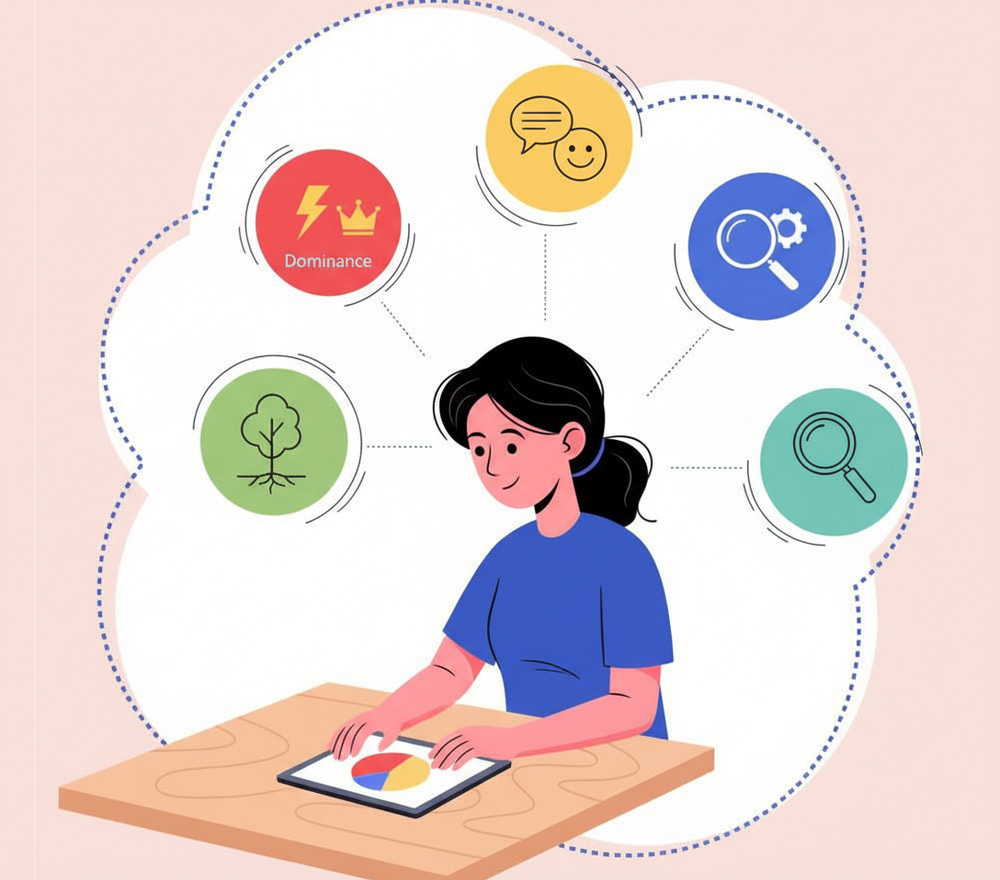
DISC Personality Assessment Test
Get StartedWhat Is DISC and Why Do People Use It
Organizations of every size rely on DISC to illuminate how people prefer to communicate, make decisions, and collaborate under pressure. Rooted in the work of psychologist William Moulton Marston, the framework maps typical behavioral patterns into an easy-to-understand language, which makes it approachable for non-psychologists while still being rigorous enough to inform real-world decisions. Instead of boxing people in, the lens offers nuance about tendencies across contexts, which is why it thrives in leadership programs, talent selection, client-facing roles, and conflict resolution practices. In many onboarding programs, teams introduce the tool early so a shared vocabulary forms before friction points appear.
Adopters often begin with a standardized measure, such as the DISC test, to establish a shared vocabulary that transforms day-to-day collaboration. Beyond icebreakers, the instrument supports targeted coaching conversations, sharper feedback loops, and clearer handoffs between colleagues. Many newcomers also ask how the DISC model test compares to other inventories, and they DISCover this framework prioritizes observable behavior rather than hidden motives. That pragmatic focus is precisely why managers often integrate it with competency models, goal-setting cycles, and performance reviews. When introduced thoughtfully, the insights spark curiosity instead of labels, encouraging people to experiment with new communication strategies. Over time, the common language amplifies trust and improves psychological safety across the organization.
- Easy-to-grasp language that accelerates team alignment.
- Actionable insights for coaching, delegation, and feedback.
- Reliable structure for debriefs after projects or incidents.
- Scalable approach that works for both individuals and groups.
How the Model Works and Core Dimensions
At its core, DISC clusters behaviors into patterns often summarized as Dominance, Influence, Steadiness, and Conscientiousness. These patterns describe how someone tends to approach problems, interact with people, pace workflows, and follow rules. High-D styles cut through ambiguity and prioritize decisive action, while high-I styles energize rooms and build networks with ease. High-S styles stabilize teams with patience and consistency, whereas high-C styles elevate quality through analysis and precision. Although people may prefer one or two styles, everyone can flex across contexts, which is why skillful practitioners emphasize range, not rigid type.
When results are clustered, a concise label, sometimes called a DISC profile test, clarifies the predominant blend without reducing the person to a stereotype. Practitioners look beyond a single letter and examine intensities, paired combinations, and situational triggers. To make the model practical, facilitators translate patterns into daily habits like how to frame requests, how much detail to include, and what kind of follow-up prevents friction. Budget-conscious teams appreciate that some providers offer a DISC model test free option for pilots, which helps organizations test fit before full-scale adoption.
| Dimension | Emphasizes | Shines When |
|---|---|---|
| Dominance (D) | Decisiveness, results, bold moves | Setting direction, removing blockers, rapid execution |
| Influence (I) | Persuasion, enthusiasm, visibility | Rallying stakeholders, storytelling, stakeholder buy-in |
| Steadiness (S) | Reliability, harmony, patience | Customer care, team cohesion, process continuity |
| Conscientiousness (C) | Accuracy, standards, logic | Quality control, risk management, complex analysis |
Because behaviors are observable, the framework integrates seamlessly with role design, sprint rituals, and feedback cadences. Teams quickly learn when to dial up directness, when to expand context, and when to pause for alignment. Leaders then translate those insights into operating norms that reduce miscommunication and improve throughput across cross-functional projects.
Benefits in Hiring, Coaching, and Teamwork
Recruiters, managers, and coaches leverage DISC because it bridges the gap between potential and performance. Rather than relying on vague impressions, hiring teams anchor interviews to behavioral cues that map to role needs, such as decomposing complex problems or influencing senior stakeholders. In development programs, leaders reflect on blind spots that sabotage their impact and rehearse alternatives that better fit the situation. That shift from instinct to intention compounds over time, resulting in higher trust, fewer escalations, and smoother handoffs between partners.
For structured selection processes, many practitioners pair behavioral prompts with the DISC assessment test to increase consistency without losing humanity. In learning tracks, facilitators debrief group dynamics and highlight where certain styles might feel stretched by the team’s pace, risk tolerance, or appetite for detail. Organizations with constrained budgets sometimes experiment with a DISC assessment test free pilot to validate relevance before committing to enterprise rollouts. The biggest returns typically show up in moments of tension, where a shared language helps colleagues separate intent from impact and choose a more skillful response.
- Sharper job-related behavioral questions during interviews.
- Personalized coaching plans aligned to measurable habits.
- Clearer meetings with explicit norms for pace and detail.
- Healthier conflict resolution grounded in mutual understanding.
Taking the Assessment and Reading Results
Completing a DISC questionnaire is straightforward, usually requiring 10–20 minutes and minimal prep. Respondents select statements that feel most and least like them, and the system computes patterns across preferences. In many rollouts, participants complete a DISC test online through a secure portal before workshops, so facilitators can tailor exercises and case studies to the group. After completion, debriefs focus on practical translation: how to adjust tone, structure messages, and sequence requests depending on the audience and the stakes.
To get more value, consider a staged approach that starts with baseline results and ends with concrete habit changes. Many learners appreciate curated practice, while some teams explore a DISC test for free trial in early phases to reduce friction as they socialize the approach. Effective debriefs emphasize range, not labels, and they tie insights to moments that matter, like stakeholder updates, incident postmortems, or quarterly planning. Finally, capture two or three behavioral experiments you will try in the next week, and revisit them in a retrospective to refine your playbook.
- Schedule the assessment and block time for reflection immediately after.
- Read the overview, then dive into pages on communication preferences.
- Draft action steps aligned to upcoming meetings or deliverables.
- Ask a peer or manager to observe and give feedback on one habit.
Rolling It Out Across Teams and Programs
Enterprise adoption succeeds when leaders treat DISC as an operating system upgrade rather than a one-off workshop. First, align on outcomes: fewer misfires in handoffs, faster decisions, higher client satisfaction, or reduced rework. Then map each desired outcome to one or two behaviors, and practice those in real meetings with real stakes. Some groups start with small cohorts and multiply wins across departments, sharing playbooks and retros as they go to maintain momentum.
Training teams often curate introductory resources, and employees sometimes ask about a DISC profile test free option to explore fit before a deeper program. For enablement libraries, program managers may include worksheets, job aids, and a limited set of case simulations. In some knowledge hubs, people request a DISC personality test free download so they can review materials offline during travel or field work. To embed change, leaders weave the language into rituals like kickoff agendas, decision logs, and lessons-learned documents, ensuring insights persist long after the initial enthusiasm fades.
- Define measurable outcomes and behaviors linked to business goals.
- Integrate practice into live meetings and client interactions.
- Share success stories and artifacts across teams to scale adoption.
- Revisit norms quarterly to adapt to new priorities and constraints.
FAQ: DISC Questions Answered
What does DISC actually measure?
DISC focuses on observable behavior, especially how people approach problems, interact with others, and respond to rules and pace. Rather than diagnosing personality disorders or traits in a clinical sense, it provides a practical language for collaboration. In public catalogs, some providers include a DISC personality test free option, which helps newcomers understand the basics before investing in a fuller program.
How accurate and reliable is it?
Well-constructed instruments use strong psychometrics, periodic norming, and clear instructions to improve reliability. Accuracy also depends on self-awareness and context, which is why debriefs and feedback loops matter. Skilled facilitators connect patterns to real scenarios, stress-test interpretations, and emphasize growth rather than fixed types.
Can results change over time?
Behavioral preferences can shift with role changes, new environments, or deliberate practice, though core tendencies often remain recognizable. Rather than treating the output as destiny, high performers use it as a compass for situational agility. Ongoing reflection, coaching, and habit tracking keep insights relevant as responsibilities evolve.
Is there a free version worth trying?
Low-cost or trial options can be useful for orientation, especially when budgets are tight. Even so, deeper programs typically add tailored reports, group analytics, and facilitator-led debriefs that drive real behavior change. In explanatory materials, you may see references to the DISC test personality concept to describe how styles present in everyday interactions.
How long does it take, and what’s the ideal preparation?
Most questionnaires take under twenty minutes, and the best preparation is a calm setting with minimal distractions. Read instructions carefully, answer honestly, and schedule a reflection window immediately after completion. Pair the insights with a short action plan so the learning translates into visible improvements next week.
Conclusion: Turning Insight Into Lasting Advantage
DISC becomes transformative when insights leap off the page and show up in meetings, emails, and handoffs. Treat the language as a toolkit for empathy and execution, not a label-maker, and you will see friction decrease while velocity increases. As teams practice small, high-leverage adjustments, the organization compounds gains in clarity, trust, and results, where it matters most.